Museums and universities around the world often keep human remains from archaeological sites – and face issues concerning their respectful treatment in relation to changing attitudes.
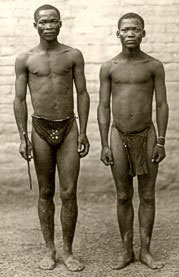
But there are sometimes remains with a rather different history, obtained – often in the name of science – by the robbing of graves of recently dead individuals. Trafficking in so-called Bushman “relics” has emerged as part of the colonial legacy of museums in South Africa and Europe.
As archaeologists and museologists at the McGregor Museum we condemn these practices unconditionally.
Some of the atrocities are revealed in the paper by Martin Legassick and Ciraj Rassool, which the South African Museum (Cape Town) and the McGregor Museum (Kimberley) have now jointly published. This important work will help museums to redress the wrongs of the past.
Reverence for the dead, past and present, makes human remains the most sensitive of materials that archaeologists are likely to uncover. Skeletons and grave goods are today treated with the utmost dignity and, where possible, living descendants are brought into negotiated partnerships in the management of sensitive material. Graves are not disturbed unless for very good reason.