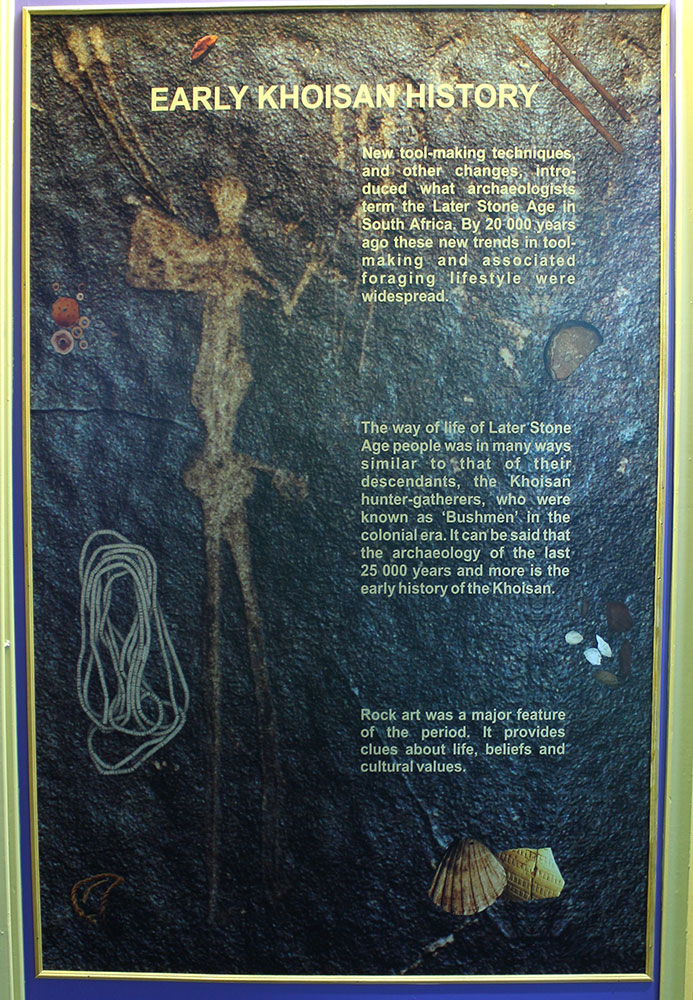
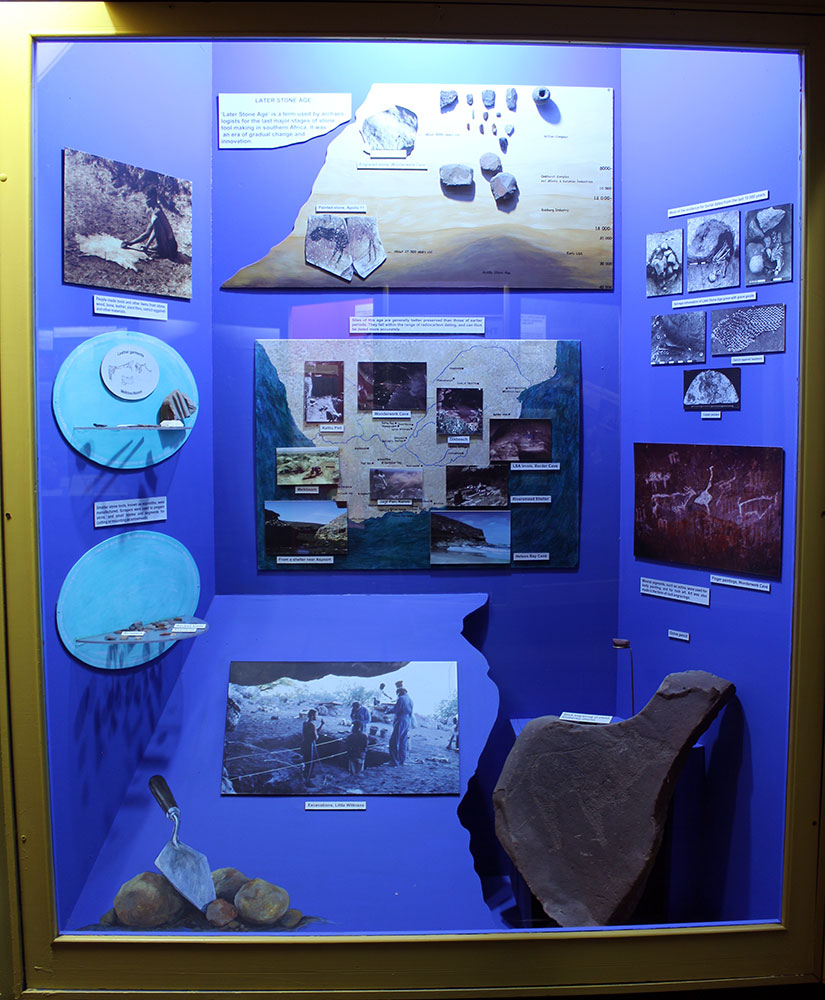
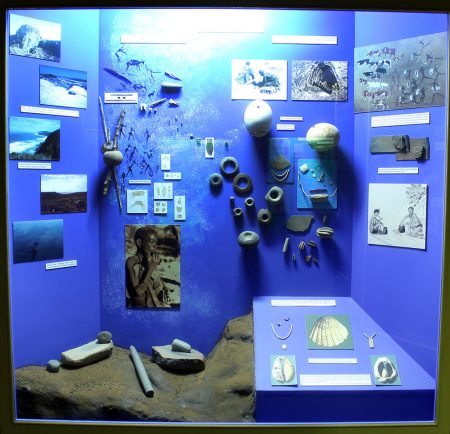
New tool-making techniques, and other changes, introduced what archaeologists term the ‘Later Stone Age’ in Southern Africa.
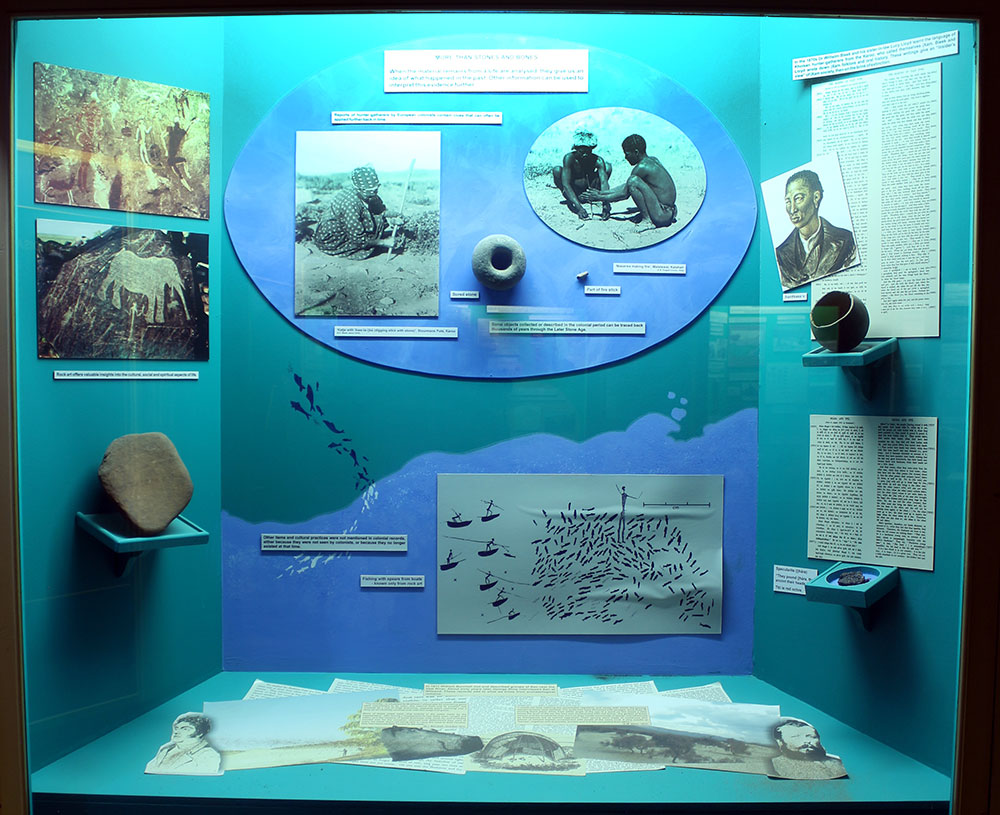
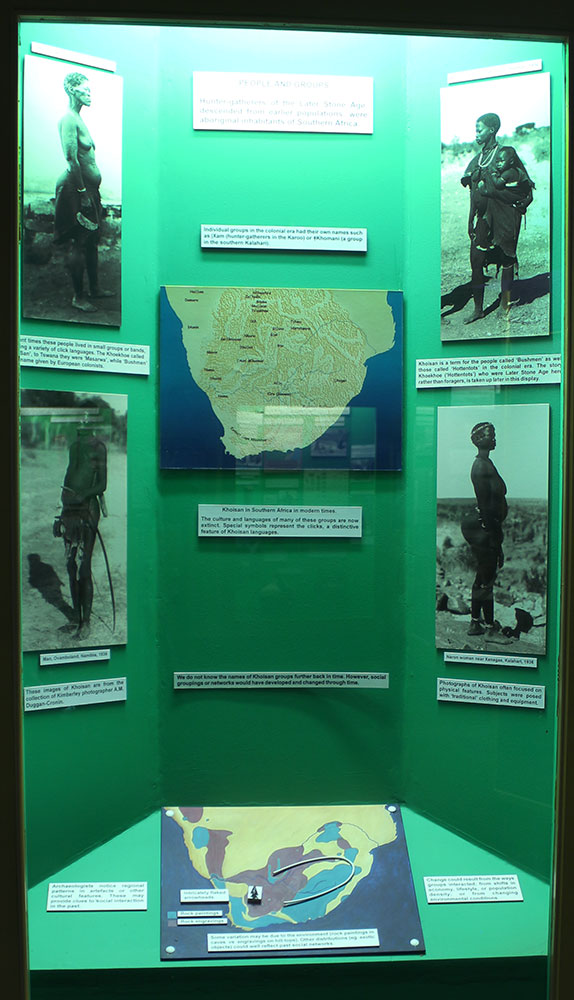
Traced back to more than 40 000 years, by 20 000 years ago these new trends in tool-making and associated foraging or hunter-gatherer lifestyle were widespread. The way of life of Later Stone Age people was in many ways similar to that of their descendants, the Khoisan hunter-gatherers, who were known as ‘Bushmen’ in the colonial era. It can be said that the archaeology of the last 25 000 years and more is the early history of the Khoisan people, but this should not be taken to mean that it was an era of limited change. On the contrary, there is evidence of dynamism and innovation, with complex regional social and material culture patterning as people engaged with diverse environments. Rock art – both paintings and engravings – was a major feature of the period, providing clues about beliefs and cultural values. Artefacts, generally better preserved than those of earlier periods, were made not just from stone, but also from other materials such as wood, bone, leather, plant fibre, and ostrich eggshell. ‘Microliths’, or small stone tools, such as ‘scrapers’, were used to prepare skins, while ‘blades’ and ‘segments’ were for cutting or mounting as arrowheads.