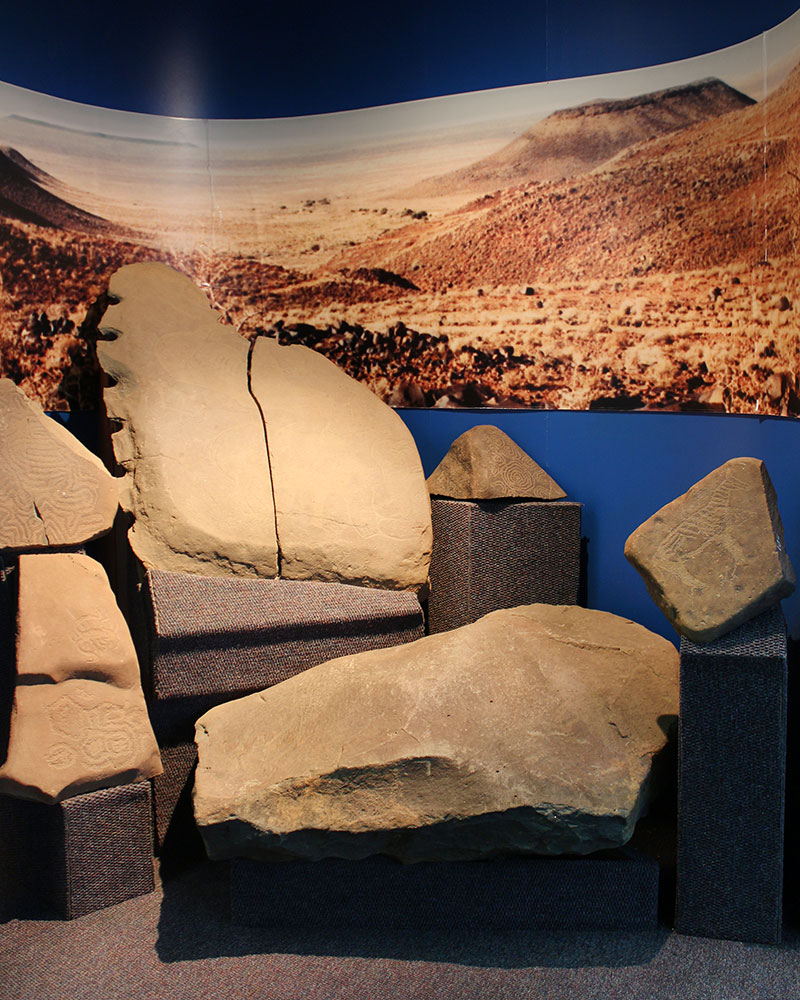
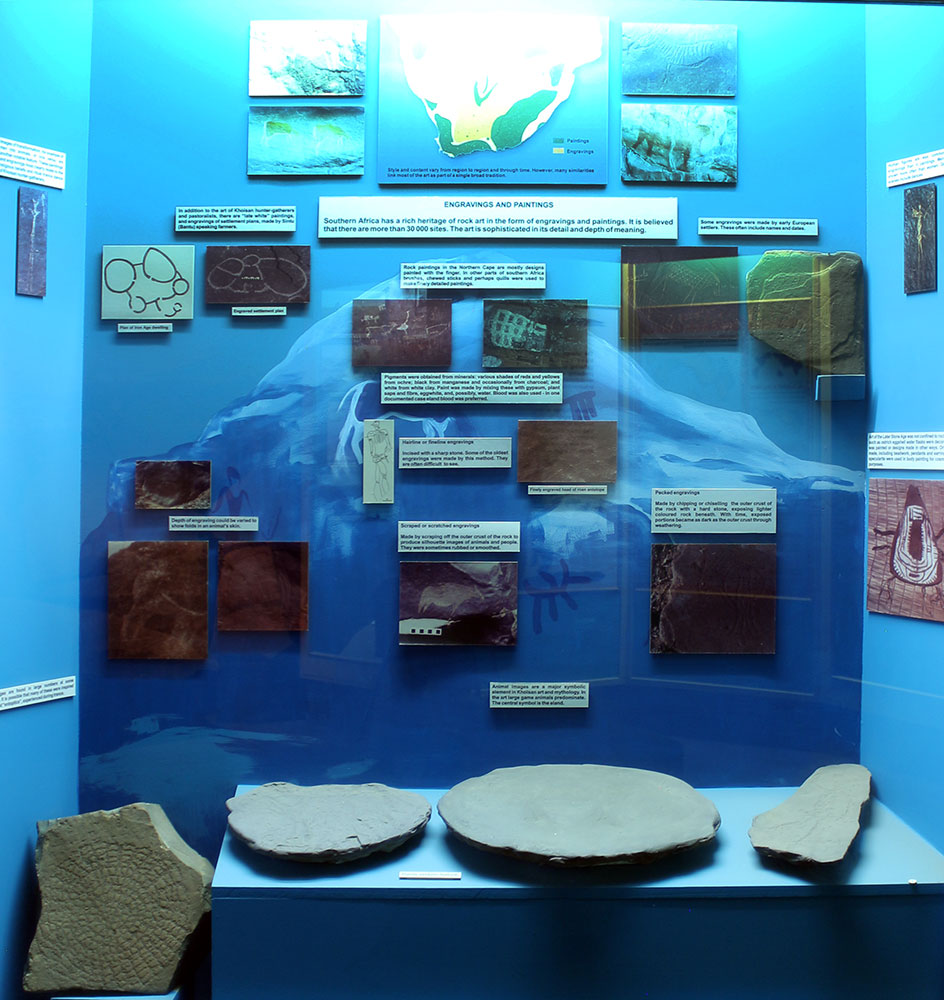
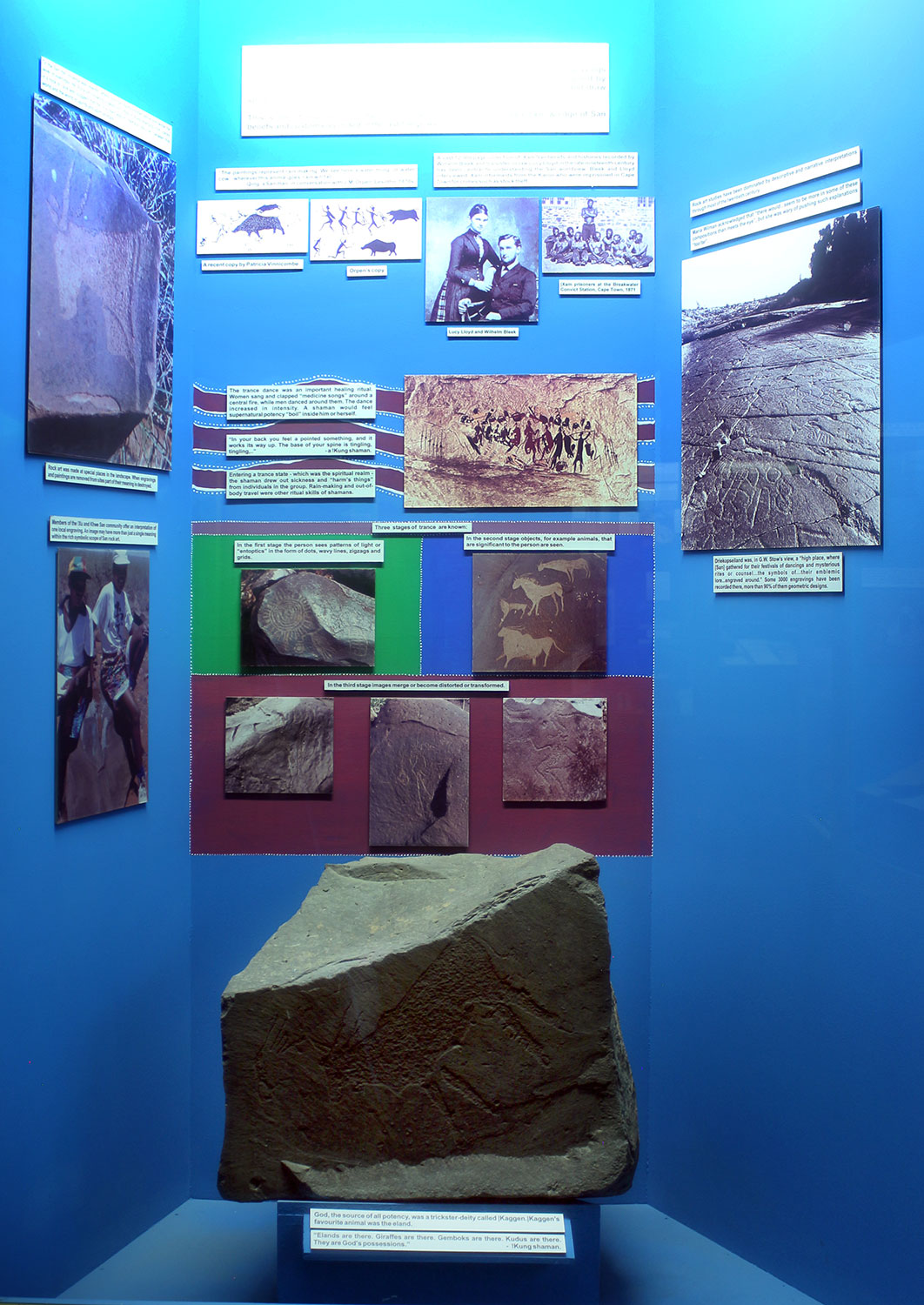
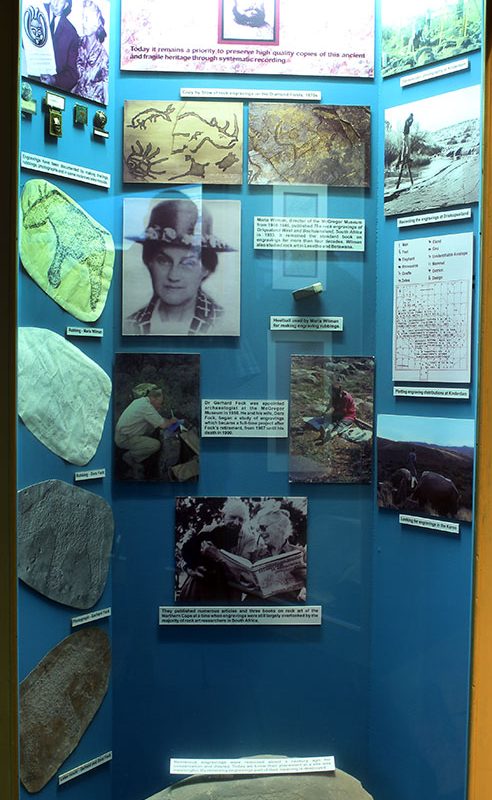
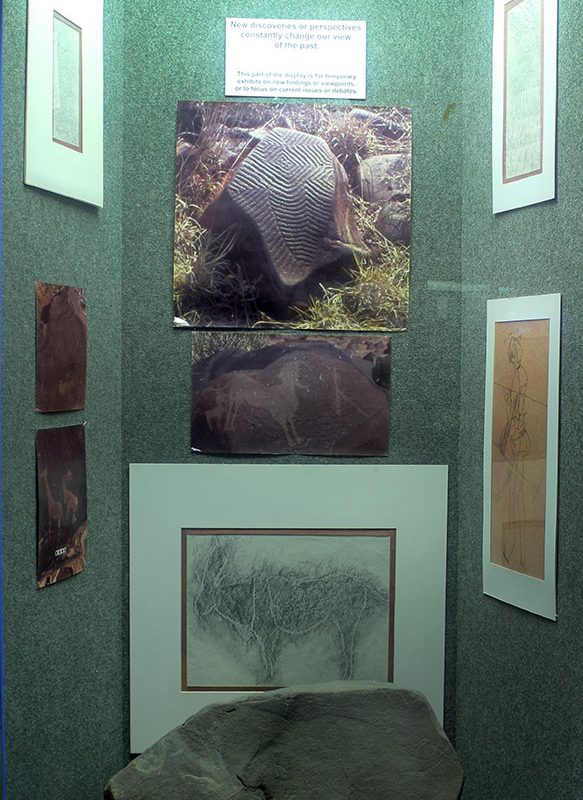
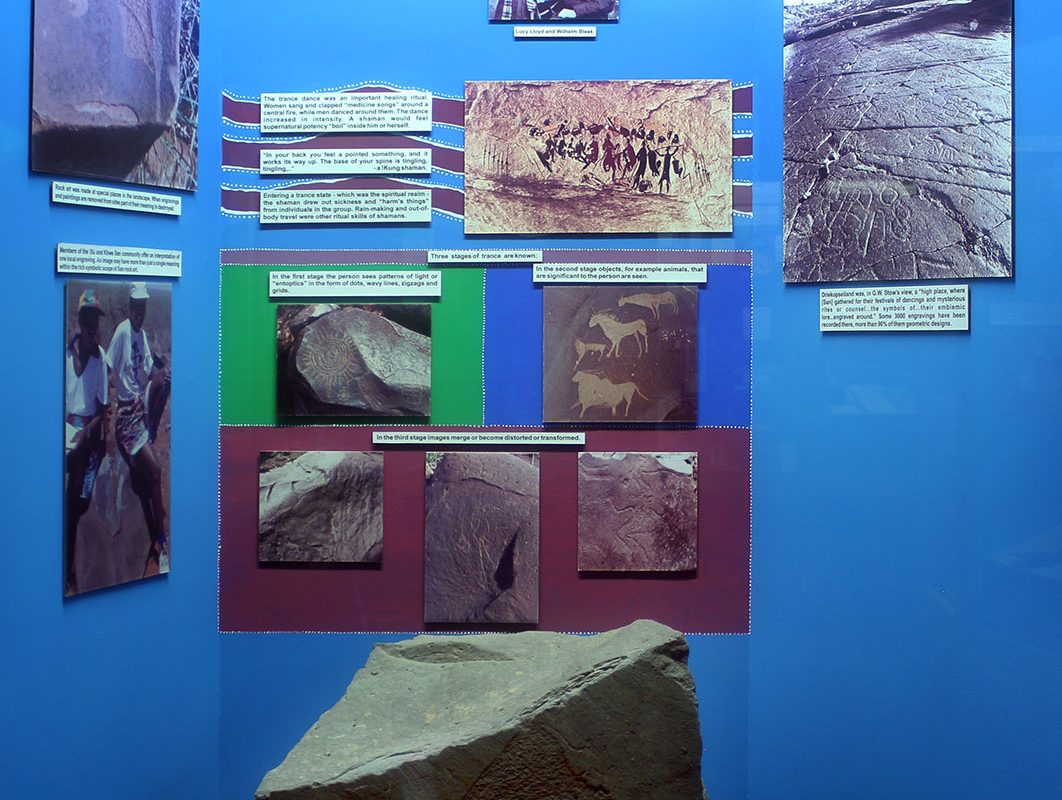
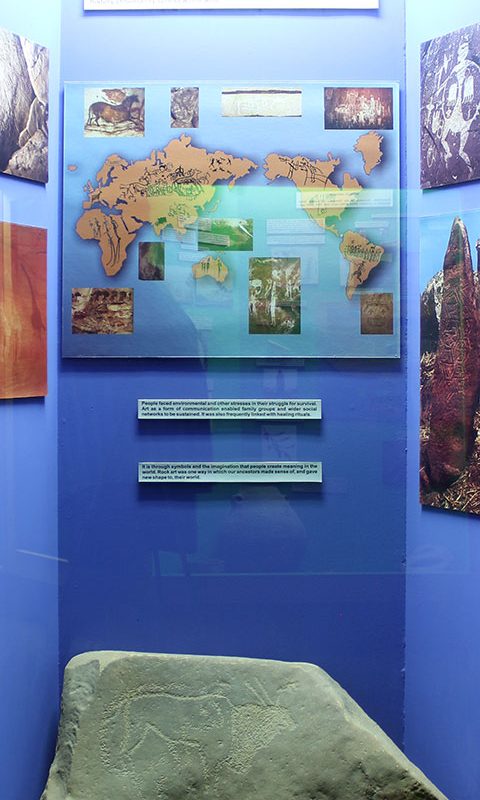
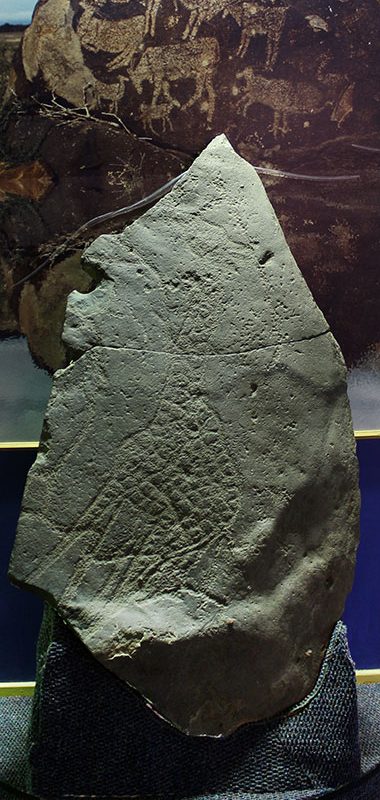
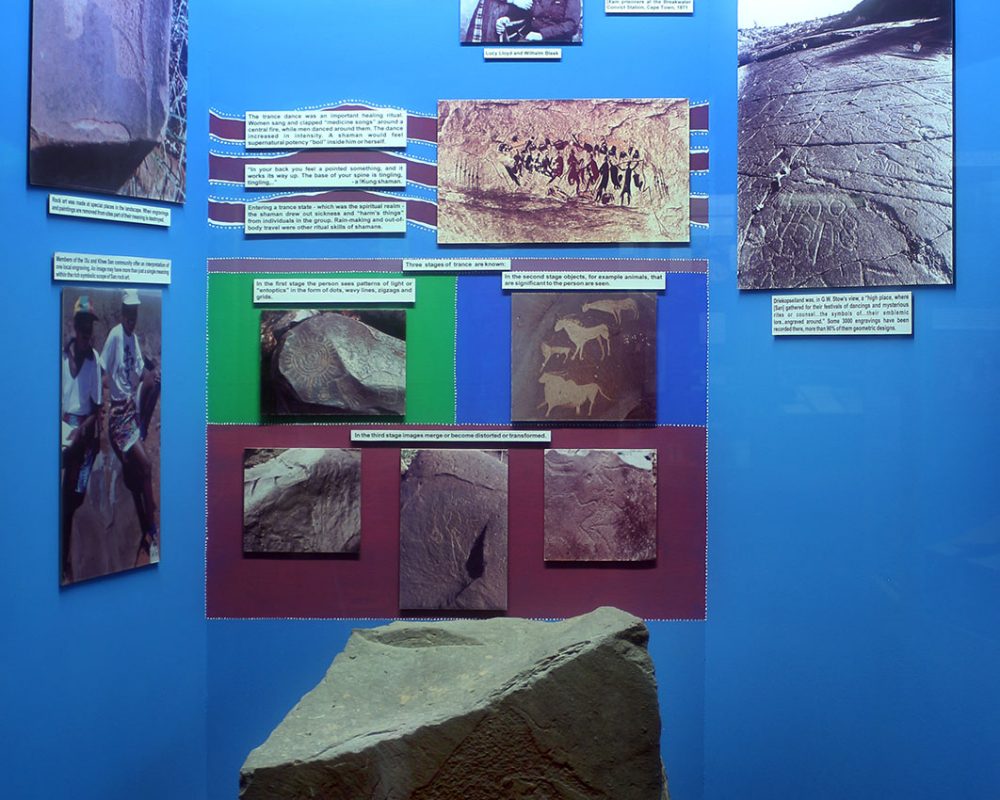
Southern Africa has a rich heritage of rock art in the form of engravings and paintings. In the Northern Cape rock engravings predominate.
The art is sophisticated in its detail and depth of meaning. Engravings are usually in the open on hills or rocky outcrops. Paintings are found in caves and shelters in more mountainous areas. In a few places both paintings and engravings were made. Style and content vary from region to region and through time. However, many similarities link most of the art as part of a single broad San tradition.
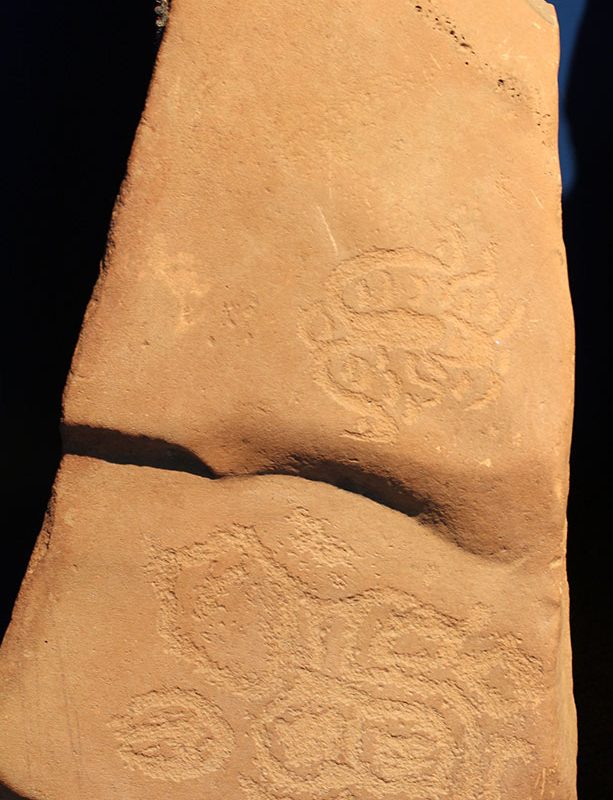
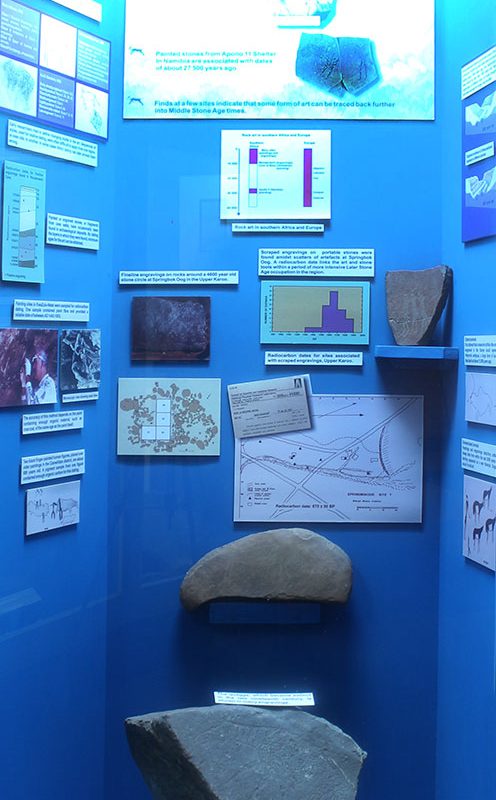
Different rock art techniques were used: Pecked engravings were made by chipping or chiselling the outer crust of the rock with a hard stone. Hairline or fineline engravings were incised with a sharp stone tool. Some of the oldest engravings were made by this method. Scraped or scratched engravings were made by scraping off the outer crust of the rock to produce silhouette images of animals and people. Rock paintings in the Northern Cape are mostly designs painted with the finger. Pigments were obtained from minerals: various shades of reds and yellows from ochre; black from manganese and occasionally from charcoal; and white from white clay. Paint was made by mixing these with gypsum, plant saps and fibre, eggwhite, and possibly water. Blood was also used… in one documented case blood from the eland antelope was preferred.